
Best Fishing Lakes in Texas


Picking a “top” list of Texas fishing lakes isn’t easy - there’s a ton of incredible water across the state, and what’s best can depend on your style, target species, and the season. That said, Texas is home to some of the best freshwater fishing in the U.S., with massive reservoirs, winding creek arms, and lakes known for largemouth bass, crappie, catfish, and more. These lakes attract anglers year-round, offering reliable bass fishing, diverse habitats, and structure that consistently hold fish. From trophy bass hotspots in East Texas to canyon lakes along the Rio Grande, anglers can find productive shorelines, deep-water structure, and abundant forage for every skill level.
In this guide, we highlight five popular fishing lakes in Texas and show you how to use Deep Dive’s map layers to locate fish faster and avoid unproductive water.
Top 5 lakes to fish in Texas
Lake Fork
Why It’s Popular: Lake Fork is the "Trophy Bass Capital" of Texas, famous for producing largemouth bass over 10 pounds consistently. The lake spans over 27,000 acres, with winding creek arms, shallow flats, scattered timber, and submerged vegetation that provide perfect hiding spots for bass and crappie. Night fishing is popular for catfish along the creek channels. Its combination of shallow spawning flats and deep creek channels gives anglers multiple productive patterns in one trip, making it a consistent hotspot for trophy bass.
Fish Species: Largemouth Bass, White and Black Crappie, Channel and Flathead Catfish, White Bass, Sunfish.
Seasonal Conditions: In Spring, bass stage on shallow flats and around submerged timber for spawning. Summer pushes fish to deeper flats, offshore humps, and shaded timber areas. Fall drives bass along wind-blown points and creek channels where baitfish gather. Winter sees bass holding in deeper pockets and main-lake creek channels where temperatures remain stable, offering predictable spots for trophy fish.
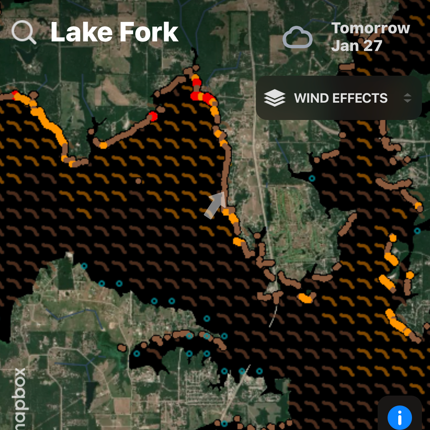
Deep Dive Pro Tip: Lake Fork is highly influenced by wind-driven water movement and inflow from creeks. Use the Wave Impacts layer to locate points and flats where wind pushes baitfish toward shorelines. Pair this with the Water Inflows layer to see where fresh water enters the lake, concentrating prey and attracting active bass.
Toledo Bend
Why It’s Popular: Toledo Bend, straddling the Texas-Louisiana border, is one of the largest and most productive bass lakes in the U.S., covering roughly 181,000 acres. Its combination of submerged timber, brush piles, and deep-water structure supports both high numbers and trophy-sized largemouth bass. This diversity also supports crappie, catfish, white bass, and sunfish, making it one of the most versatile fisheries in the country.
Fish Species: Largemouth Bass, Spotted Bass, White and Black Crappie, Channel, Blue, and Flathead Catfish, White Bass, Sunfish.
Seasonal Conditions: In Spring, bass stage on shallow points and timber for spawning. Summer pushes fish to deep brush, ledges, and submerged trees. Fall drives bass along main-lake points and river channels where baitfish concentrate. Winter sees fish suspending along deeper timber and river cuts.
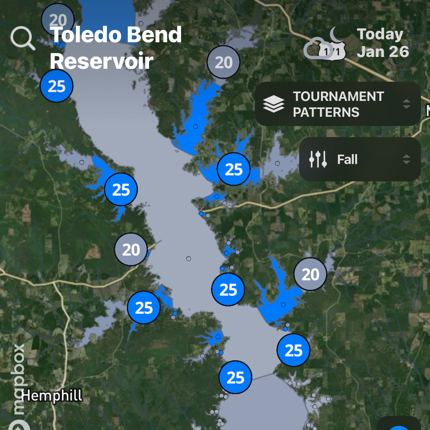
Deep Dive Pro Tip: Due to Toledo Bend’s massive 181,000 acre size, don't waste time & gas searching. Use the Tournament Patterns tool to leverage real-world data from professional tournament events. This helps identify proven depth ranges and high percentage structures so you can eliminate miles of low probability water.
Sam Rayburn Reservoir
Why It’s Popular: "Big Sam" is the largest lake entirely within Texas, covering approximately 114,000 acres. Known as the "Grass King," it has vast hydrilla flats, extensive timber, and brush piles. This combination allows anglers to catch both high numbers and trophy bass, while also providing opportunities for crappie, catfish, and white bass. Its size and habitat diversity make it a premier tournament and recreational lake.
Fish Species: Largemouth Bass, White and Black Crappie, Blue and Flathead Catfish, White Bass, Sunfish.
Seasonal Conditions: In Spring, bass move to shallow flats and grass edges for spawning. Summer drives fish to deeper points and main-lake timber to escape heat and pressure. Fall sees bass feeding along points and drains following shad schools. Winter concentrates bass in deep creek channels and main-lake pockets where temperatures are more stable.
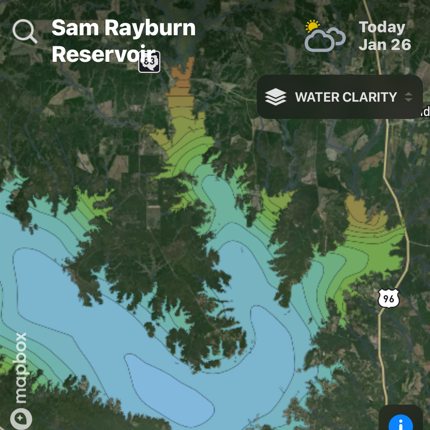
Deep Dive Pro Tip: Sam Rayburn has varying water clarity across shallow and deep flats. Using the Water Clarity map layer helps determine where bass are likely holding by depth and visibility. Clear water makes bass cautious, requiring precise depth and lure selection, while murky water allows shallower, more aggressive presentations.
Falcon Lake
Why It’s Popular: Falcon Lake, located along the Rio Grande in southern Texas, is known for rugged terrain, steep cliffs, mesquite brush, and submerged rocky structure. It spans over 83,000 acres and holds Florida Largemouth Bass, providing both numbers and size for serious structure fishermen. It is a premier destination for those targeting heavy-bodied bass and trophy alligator gar in a river controlled reservoir.
Fish Species: Largemouth Bass, Channel, Blue, and Flathead Catfish, White Bass, Alligator Gar.
Seasonal Conditions: Falcon’s water levels shift dramatically, so successful anglers must adapt by finding the "new" shoreline or deep-water ledges where fish retreat. In Spring, bass stage near submerged structure and rocky bottoms. As water levels drop or temperatures rise in Summer, fish retreat to deep river ledges. The southern climate means the Winter pattern here is short, with fish often starting pre-spawn movements earlier than elsewhere in Texas.
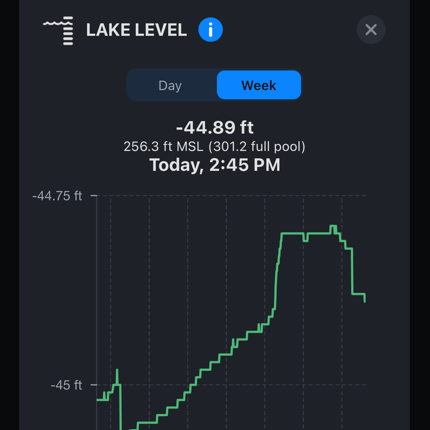
Deep Dive Pro Tip: Use the Lake Level tool to monitor hourly data. Bass move shallower when the water is rising and deeper when it's falling. This tells you instantly if you should be flipping mesquite brush or fish deeper ledges.
Lake Amistad
Why It’s Popular: Amistad is famous for its breathtaking limestone canyons and ultra-clear water. It is one of the few places in Texas where you can target both trophy-sized largemouth and smallmouth on deep ledges and rocky drop-offs. The combination of deep water and consistent fish populations makes it a favorite for quality and quantity.
Fish Species: Largemouth Bass, Smallmouth Bass, Striped Bass, White Bass, Channel and Blue Catfish, Crappie.
Seasonal Conditions: In the Spring, bass spawn on primary limestone points and deeper secondary ledges within the major canyons. Summer forces fish deep, often suspending along vertical canyon walls in 30–50 feet of water. Fall and Winter focus on rocky secondary points and submerged timber near the mouth of the canyons, as most hydrilla remains high and dry at current lake levels.
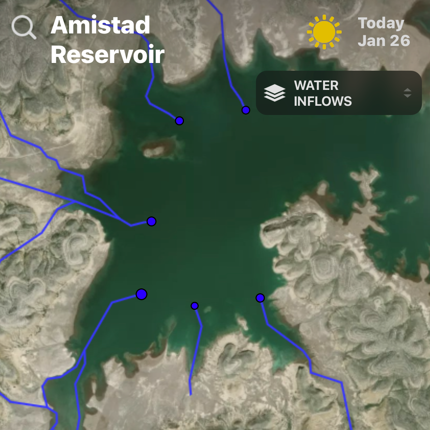
Deep Dive Pro Tip: With the lake at historic lows, the Water Inflows map layer is your most valuable asset to find current. Focus on where the Rio Grande and Devils River feed into the main lake, as these areas concentrate baitfish and active bass.
Let Deep Dive be your guide on the water
Make the most out of your next trip with Deep Dive. Get the pro tournament data you need to build a clear plan, so you can spend more time catching and less time searching.
- Proven Strategies: Stop guessing and start leveraging real patterns from professional tournament wins. Deep Dive processes over a million input combinations to give you the exact baits and techniques that work on your lake under your specific seasonal and water conditions.
- Find the Best Spots: Use Deep Dive’s advanced map layers to break down lake layout, structure, and key sections, allowing you to eliminate unproductive water and focus on high-percentage areas before you ever make a cast.
- Real-Time Weather & Forecast: Get 7-day fishing forecasts featuring hyper-local bite windows, barometric pressure trends, and precise major/minor feeding times to pinpoint exactly when to be on the water.
Ready to master your lake?


